
Services
What We Assess
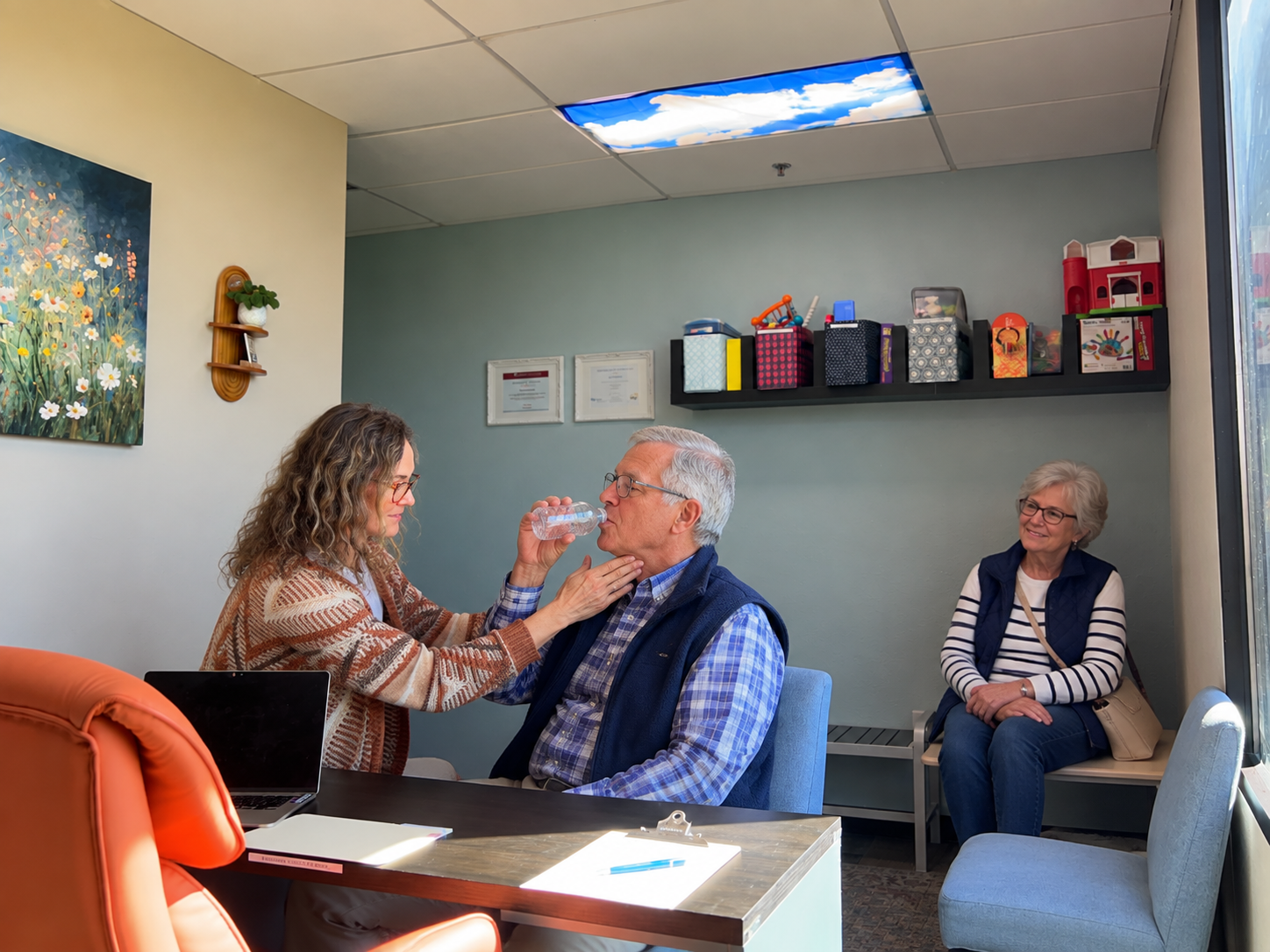
Our evaluation provides thorough, objective profiling of speech, language, cognitive-linguistic, auditory processing, visual-spatial, and social-pragmatic impairments. We identify underlying communication bottlenecks, assess developmental delays, and gather standardized behavioral data.
Diagnostic Scope
Within our clinical scope of practice, Speech-Language Pathologists formally diagnose speech, language, cognitive-communication, auditory processing, motor speech, and feeding disorders.
Mult-Disciplinary Diagnositc Boundaries
For conditions such as Autism Spectrum Disorder (ASD), Attention-Deficit/Hyperactivity Disorder (ADHD), and Intellectual/Developmental Disabilities (IDD), our comprehensive testing provides critical, standardized clinical data to support a differential diagnosis. However, formal medical/psychiatric diagnosis of these conditions must be rendered by a qualified physician (Primary Care Provider, Developmental Pediatrician, Neurologist) or a Licensed Clinical Psychologist.
State Scope of Practice Note:
Scope of practice regulations regarding Autism diagnosis vary by state. In certain states (such as Illinois), Speech-Language Pathologists with specialized training are state-sanctioned to independently render a formal diagnosis of Autism Spectrum Disorder. In Colorado, however, state medical guidelines and Medicaid/payer regulations require that formal medical diagnoses of ASD, ADHD, or IDD be finalized by a qualified physician or licensed psychologist. Lifespan Assessment Services works collaboratively with your PCP or psychologist, furnishing them with our comprehensive testing data (including ADOS-2 results) so they can establish the official diagnosis and authorize medical care seamlessly.
Diagnostic Scope by Area of Concern
-
What Parents & Caregivers Notice: Unclear speech, difficulty making specific sounds, slurred words, stuttering, or struggle with the physical movements needed to speak.
Medically Necessary Diagnostic Categories: Articulation Disorders, Phonological Disorders, Reduced Intelligibility, Childhood Apraxia of Speech (Oral/Speech Apraxia), Dysarthria, Speech-Sound Errors, and Fluency Disorders (Stuttering).
-
What Parents & Caregivers Notice: Difficulty following directions, limited vocabulary, trouble combining words, struggle to express thoughts, or loss of language skills following an illness or injury.
Medically Necessary Diagnostic Categories: Receptive & Expressive Language Disorders, Syntactical Deficits, Morphological Disorders, Semantic Disorders, Developmental Language Delay, and Childhood Aphasia (including post-brain injury or stroke language impairment).
-
What Parents & Caregivers Notice: Trouble remembering information, slow task completion, difficulty focusing, visual-spatial confusion, or academic challenges related to reading and writing.
Medically Necessary Diagnostic Categories: Cognitive-Communication Deficits, Memory Impairments (Auditory, Visual, & Working Memory), Processing Speed Bottlenecks, Attention-Deficit/Hyperactivity Disorder (ADHD) impacts, Dyslexia/Alexia, and Symbolic Dysfunction.
-
What Parents & Caregivers Notice: Difficulty interacting with peers, trouble reading social cues, limited eye contact, rigid behaviors, or intense sensory-seeking/avoidant behaviors.
Medically Necessary Diagnostic Categories: Autism Spectrum Disorder (ASD) profiling, Social-Pragmatic Communication Disorder, Childhood Disorders of Social Functioning, Nonverbal Communication Deficits, and Sensory Integration/Behavioral Coping Impacts.
-
What Parents & Caregivers Notice: Difficulty understanding speech in noisy rooms, sound discrimination issues despite normal hearing, or functional communication challenges after receiving hearing aids or cochlear implants.
Medically Necessary Diagnostic Categories: Impaired Auditory Perception & Discrimination, Abnormal Auditory Perceptions, Central Auditory Processing Disorder (CAPD) indicators, and Post-Implant/Hearing Aid Aural Rehabilitation profiling.
-
What Parents & Caregivers Notice: Chronic picky eating, coughing/choking during meals, oral muscle weakness, or jaw/dental alignment issues affecting chewing and swallowing.
Medically Necessary Diagnostic Categories: Chronic Feeding Difficulties, Swallowing Dysfunctions, Oral-Motor Deficits, and Dentofacial Functional Abnormalities.
Diagnostic Scope by ICD-10 Clinical Categories
At Lifespan Assessment Services, LLC, our comprehensive evaluation protocols map directly to recognized ICD-10 diagnostic categories within the Speech-Language Pathology scope of practice:
-
Phonological Disorder (F80.0) & Speech-Sound Errors
Childhood Apraxia of Speech / Motor Speech Deficits (R47.81 Slurred & Distorted Speech / Oral Apraxia)
Childhood-Onset Fluency Disorder / Stuttering (F80.81)
Dentofacial Functional Abnormalities (M26.50)
-
Expressive Language Disorder (F80.1)
Mixed Receptive-Expressive Language Disorder (F80.2)
Developmental Disorder of Speech & Language, Unspecified (F80.9)
Dyslexia & Written Language Disorders (R48.0 Dyslexia / R48.8 Other Symbolic Dysfunction)
-
Cognitive-Communication Deficits (R41.841)
Auditory & Visual Processing Distortions (H93.299 Abnormal Auditory Perception / H53.15 Visual Distortions)
Sensory Sensation & Coping Integration Impacts (R20.9 Skin Sensation / F98.8 Behavioral & Emotional Onset)
-
Social Pragmatic Communication Disorder (F80.82)
Childhood Disorders of Social Functioning (F94.8)
Chronic Feeding Difficulties (R63.3)
Complete Standardized Assessment Library
At Lifespan Assessment Services, LLC, we maintain an extensive library of standardized, gold-standard diagnostic batteries to establish precise baseline metrics across cognitive, linguistic, sensory, motor speech, and neuro-developmental domains.
-
KBIT-2 – Kaufman Brief Intelligence Test, Second Edition (Full Scale IQ)
Leiter-3 – Leiter International Performance Scale, Third Edition (Nonverbal IQ & Cognitive Index)
SDMT – Symbol Digit Modalities Test (Processing Speed Index, Ages 8–17 & Adults)
TOMAL-2 – Test of Memory and Learning, Second Edition (Working Memory Index & Memory Indices)
-
ADI-R – Autism Diagnostic Interview-Revised
ADOS-2 – Autism Diagnostic Observation Schedule, Second Edition
ADHD-2 – Attention Deficit/Hyperactivity Disorder Test, Second Edition
ASRS – Autism Spectrum Rating Scales
CARS-2 – Childhood Autism Rating Scale, Second Edition (Standard & High-Functioning Forms)
GARS-3 – Gilliam Autism Rating Scale, Third Edition
MIGDAS-2 – Monteiro Interview Guidelines for Diagnosing the Autism Spectrum, Second Edition
SLDT-E:NU & SLDT-A:NU – Social Language Development Tests (Elementary & Adolescent: Normative Updates)
SRS-2 – Social Responsiveness Scale, Second Edition
TOPL-2 – Test of Pragmatic Language, Second Edition
TOPS-3E & TOPS-2A – Test of Problem Solving (Elementary & Adolescent)
-
ABAS-3 – Adaptive Behavior Assessment System, Third Edition
BASC-3 – Behavioral Assessment System for Children, Third Edition
BRIEF-2 – Behavior Rating Inventory of Executive Function, Second Edition
Conners-4 / Conners-EC – Conners Behavior Rating Scales
EF-Checklist & EFT-E – Executive Function Skills Checklist & Executive Functions Test-Elementary
PEARLS – Pediatric ACEs and Related Life Events Screener
SCARED – Screen for Child Anxiety Related Disorders
SP-2 / SP-Child / SP-Toddler – Sensory Profile 2 Family (Infant, Toddler, Child & School Companion forms)
Vanderbilt – NICHQ Vanderbilt Assessment Scales (ADHD)
Vineland-3 – Vineland Adaptive Behavior Scales, Third Edition
-
BESA – Bilingual English-Spanish Assessment
CASL-2 – Comprehensive Assessment of Spoken Language, Second Edition
CELF-5 & CELF-4S – Clinical Evaluation of Language Fundamentals, Fifth Edition (English) & Fourth Edition (Spanish)
CSBS DP – Communication and Symbolic Behavior Scales Developmental Profile
DAYC-2 – Developmental Assessment of Young Children, Second Edition (Adaptive, Cognitive, Communication, Social-Emotional, Physical)
DP-4 – Developmental Profile 4
EOWPVT-5 & EOWPVT-4B – Expressive One-Word Picture Vocabulary Test, 5th Edition (Co-normed ages 2–85+) & Bilingual 4th Edition
EVT-3 – Expressive Vocabulary Test, Third Edition
OWLS-2 – Oral and Written Language Scales, Second Edition (Listening Comprehension & Oral Expression)
PPVT-5 – Peabody Picture Vocabulary Test, Fifth Edition
REEL-3 – Receptive-Expressive Emergent Language Test, Third Edition
ROWPVT-5 & ROWPVT-4B – Receptive One-Word Picture Vocabulary Test, 5th Edition (Co-normed ages 2–85+) & Bilingual 4th Edition
TELD-4 & TELD-3S – Test of Early Language Development, Fourth Edition (English) & Third Edition (Spanish)
-
Beery-VMI – Beery-Buktenica Developmental Test of Visual-Motor Integration
CTAD – Compass Test of Auditory Discrimination
CTOPP-2 – Comprehensive Test of Phonological Processing, Second Edition
DAB-4 – Diagnostic Achievement Battery, Fourth Edition
Jordan – Jordan Left-Right Reversal Test
OWLS-2 (Reading/Writing) – Oral and Written Language Scales (Reading Comprehension & Written Expression)
TAPS-4 – Test of Auditory Processing Skills, Fourth Edition
TILLS – Test of Integrated Language and Literacy Skills
TOWRE-2 – Test of Word Reading Efficiency, Second Edition
TVPS-4 – Test of Visual Perceptual Skills, Fourth Edition
-
What Parents & Caregivers Notice: Chronic picky eating, coughing/choking during meals, oral muscle weakness, or jaw/dental alignment issues affecting chewing and swallowing.
Medically Necessary Diagnostic Categories: Chronic Feeding Difficulties, Swallowing Dysfunctions, Oral-Motor Deficits, and Dentofacial Functional Abnormalities.
-
AAC-Profile – Augmentative & Alternative Communication Profile: A Continuum of Learning
FCP-R – Functional Communication Profile-Revised
PediEAT – Pediatric Eating Assessment Tool